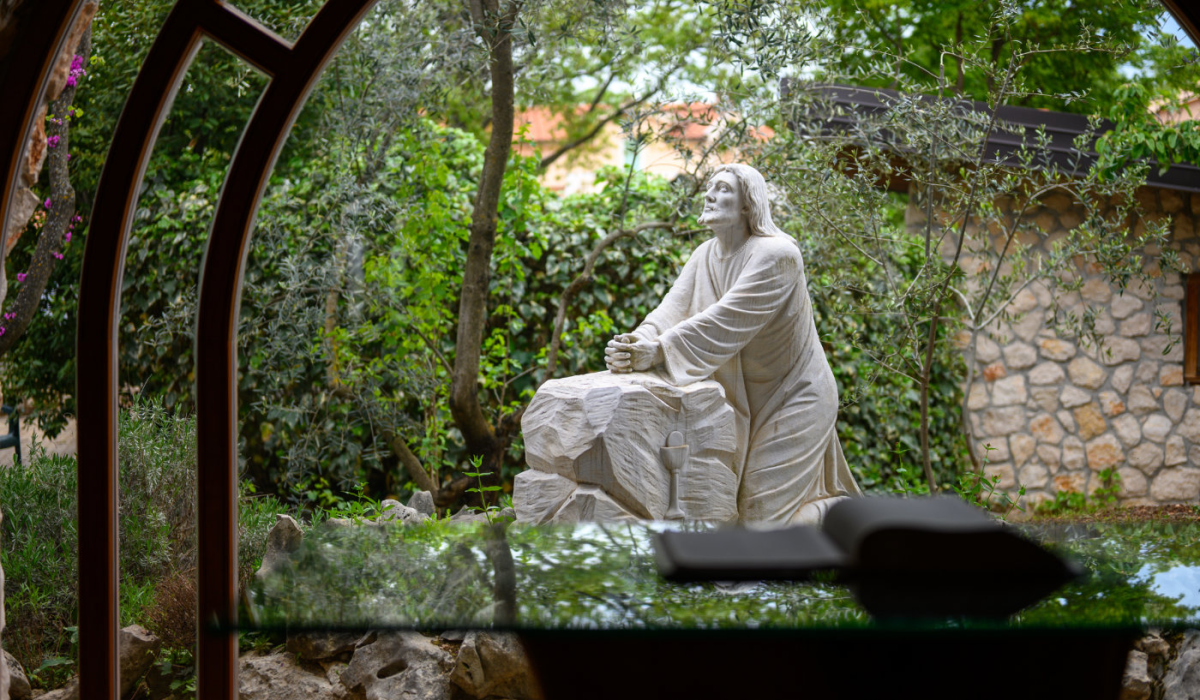

Seven years ago this summer, I suddenly ended up in the hospital. I won’t bore you here with the details of the health complication. Suffice to say, for most of the next 14 months, I was helpless. A patient. My life of action, initiative, movement, juggling the demands of our five young kids…was suddenly traded for weeks on end of waiting: for test results, the next appointment, the next procedure.
With this anniversary fresh in mind, it seemed providential to stumble upon a book recommendation—cited by Norwegian Bishop Erik Varden in a talk, “By Patience We Participate in the Passion of Christ”—entitled The Stature of Waiting by W. H. Vanstone.
Stature of waiting?!
The phrase surprised me. “Stature” suggests nobility, purpose and poise—qualities I usually don’t pair with plain-old “waiting.” But reading Vanstone’s 115-page spiritual gem caused me to re-evaluate my earlier health crisis and the countless opportunities we have each day to wait.
Instead of attempting a review or re-telling of the book here, here are 7 takeaways that Ever and I hope will improve your own stature of waiting in the little moments of each day:
1 | Jesus passed from “unfettered freedom” to “total constraint” upon his arrest. Vanstone describes how the Gospel writers convey this in striking shifts of language—where Jesus goes from being the subject of active verbs…to suddenly the direct object of others’ actions. As we meditate on this part of Jesus’ life—which was the summit of his earthly life—we are challenged to see that waiting is not down-time, dead-time, wasted time. Jesus passed from “doing to receiving what others do, from working to waiting, from the role of subject to that of object and…from action to passion,” according to Vanstone.
2 | The patient in a hospital—and in some ways each of us, including the elderly, retirees, and others—passes from “control of his own immediate destiny” to “the hands of others.” In the life of many patients, we can see this dramatic shift. As Vanstone recounts, “Now, suddenly, he [the patient] passes into the hands of others and becomes dependent on their decisions and actions.” Retired people, says Vanstone, “usually find that their life now contains a larger proportion of waiting—waiting upon the availability and convenience and arrangements of other people.” The elderly, in turn, often encounter a “second childhood” that is marked by a dependence upon others that mirrors the first years of life.
3 | Our society generally demeans “dependence” and celebrates self-reliance and independence. This assumption is in the air we breathe. Vanstone (who doesn’t agree with this view) nonetheless pinpoints it as follows: “The condition of the person who depends upon and receives from others is, ipso facto, of less dignity and worth than the person who works and achieves for himself.”
4 | We need to rediscover “the dignity which belongs to man as patient, as object, as one who waits upon the world and receives that which is done to him.” To illustrate a striking, counter-cultural point, Vanstone describes a vibrant neighborhood filled with interdependencies, relationships, and generosity, all brought about by the neighbors’ charitable stance towards those in need. He writes, “It is a truism that those for whom ‘most has to be done’ tend to be the most dearly loved; and it is understandable that the power of helplessness to kindle and attract love may deepen and enrich the whole texture of relationships within a family.”
5 | The “passion phase was the ‘greatest phase’ of Jesus’ life” (Vanstone). In the passion of Jesus, we don’t see a “sad end.” Far from it. In a chapter entitled, “The God Who Waits,” Vanstone writes that in the Passion, Jesus “disclosed the God Who Himself, of His own will, is handed over to pass from action to passion.” Jesus “works, one might say, towards a climax in which He must wait.”
6 | “Where love is, action is destined to pass into passion: working into waiting.” Powerfully, Vanstone challenges us to see that when we love another, “we create a situation of which the issue passes out of our hands.” Our acts of love—indeed, ourselves, in a Christlike life of self-gift—are now “given” into other hands “to be accepted or rejected.”
7 | “The shape of the glory of loving” invites us into a “new dimension” and “glorious possibility” as we become—in addition to the action, work, and achievement of our active lives—a “fellow receiver with God.” Those who never wait show us by their lives that they don’t care about anything; for them, nothing is worth waiting for. Waiting, Vanstone suggests, is linked to “caring,” to love, to accepting that our stature as bearers of the “image of God” means that our lives “must include not only activity but also exposure.”
So how would you evaluate your current “stature” of waiting? Do you tend to “overvalue” your activity and undervalue your times of waiting and exposure? Does your irritability or impatience—like a warning light on the dashboard—point to a deeper issue, perhaps a difficulty accepting your own “passion” as you follow Jesus and carry your cross?
While the recent anniversary of my hospitalizations brought my memories of helpless waiting back to the fore, I see daily opportunities now—alas, so many of them missed!—to enter the “new dimension” of waiting that Christ has won for us in His Passion. As we love one another—bearing the image of the Most Holy Trinity into the moments and challenges of each day—let us beg the Lord to show us the stature of waiting!

> Derek Rotty has an inspiring reflection on the importance of patience in family life featured in the National Catholic Register.
> Birgit Jones reminds us that “love begets patience” in her practical and encouraging piece (in Catholic Mom) on what it means to be patient with our loved ones.
> In “Longanimity: The Virtue of Waiting for God,” (McGrath Institute for Church Life) Theresa Smart points us to a little-discussed virtue that helps us to “wait in hope.”

 > Plan now to launch your own parish’s Trinity House Community Group this year! Learn more here and schedule a 15-minute call/zoom with our team here. For $499, your parish can access all the tools needed to host 5 transformative “Heaven in Your Home Gatherings” for families, including videos, discussion questions, marketing templates, catechetical resources, ongoing support, and more. Dioceses can also take advantage of three subscriptions for just $999. Ready to subscribe and launch a Group at your parish? Here’s where you can take the first step.
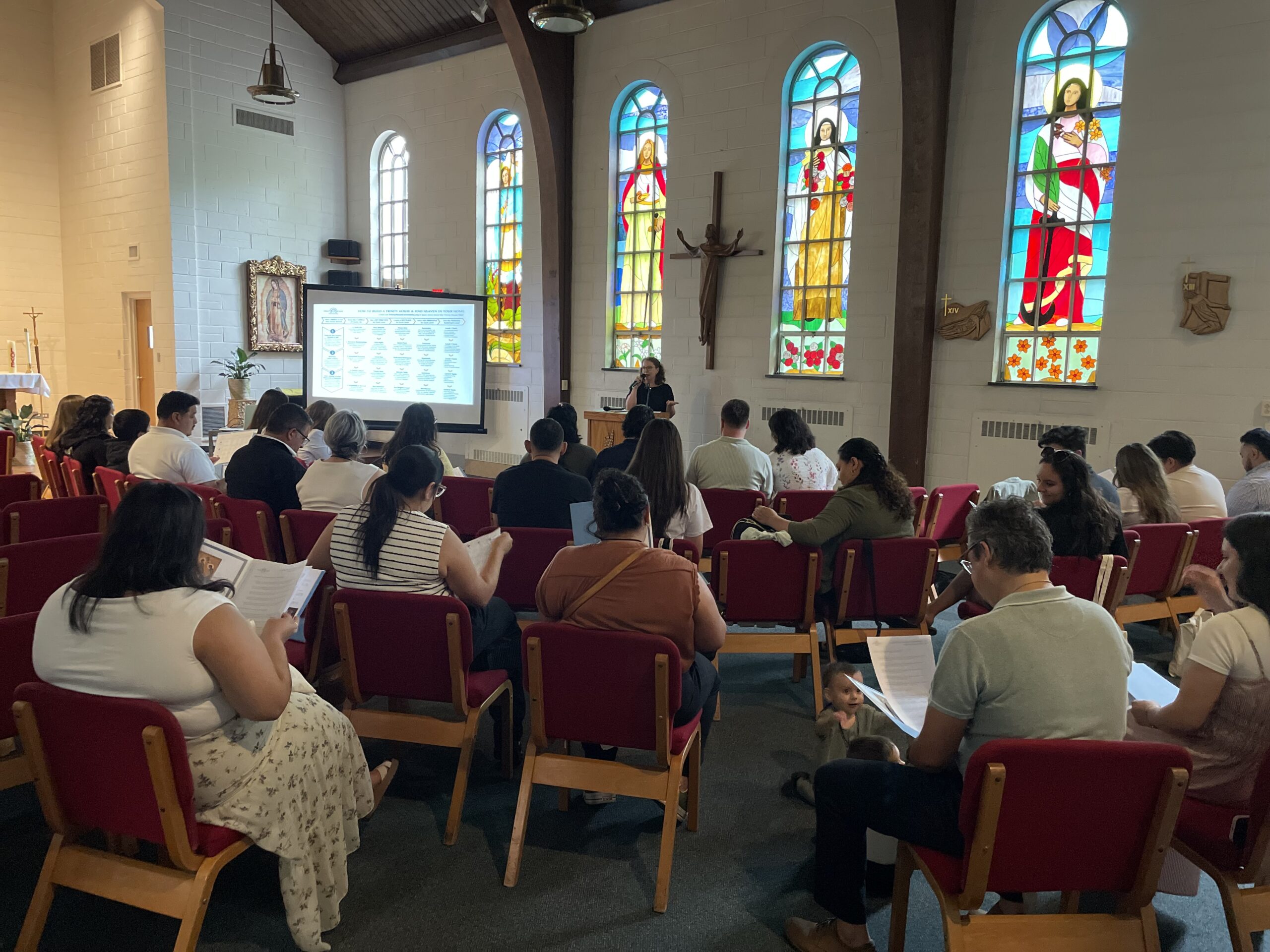
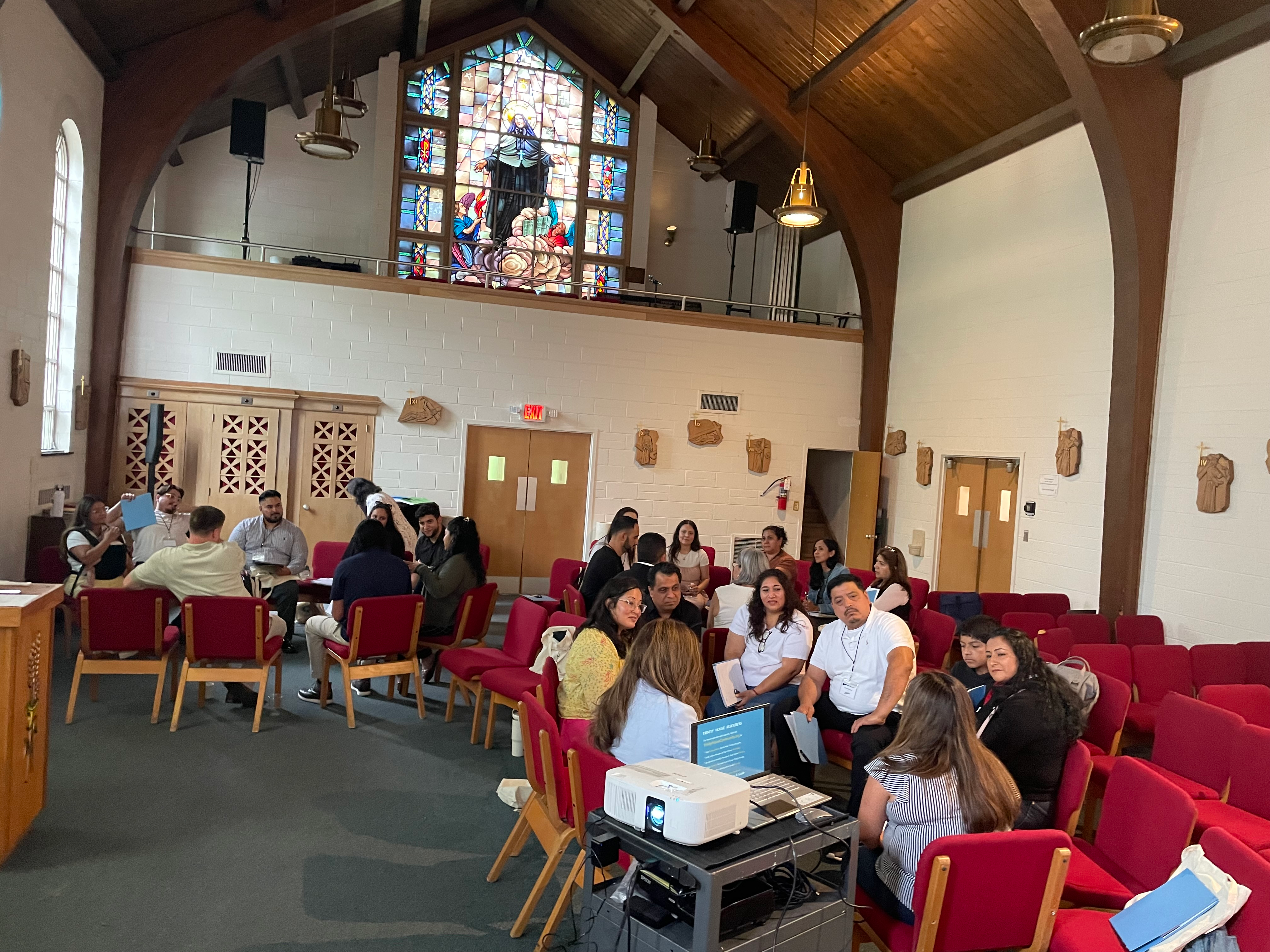
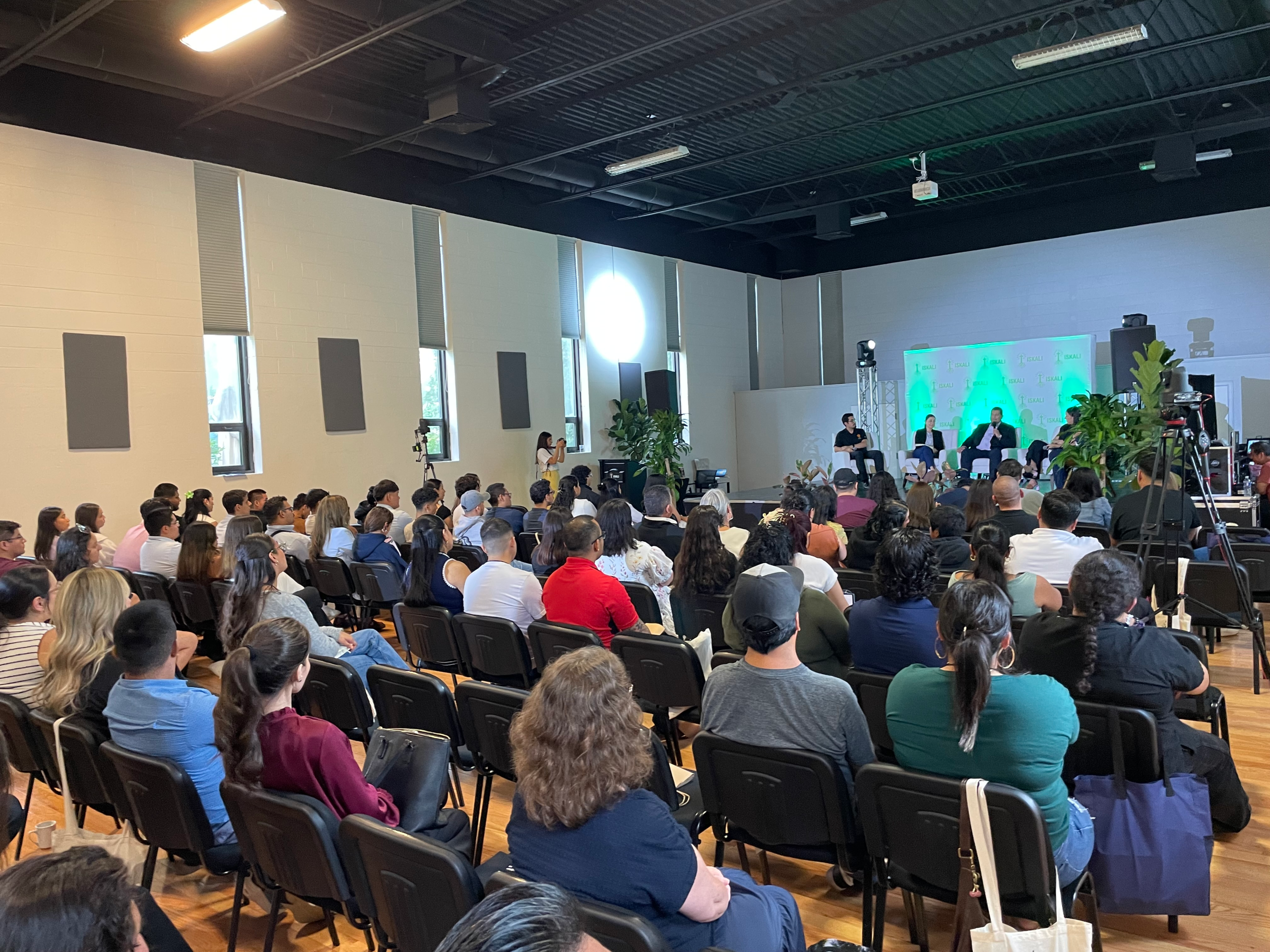
>We were honored to present at the Iskali Conference in Chicago this past weekend.
“Our Trinity House Community Group has led us to meet other families who are also intentionally parenting, who are intentionally trying to center on Christ in all parts of their life — not just at church, but at school, in sports, so that everything we do points to Christ!”
–Rachel Ravelle