
Over the last year, there have been many lively discussions about AI at the Johnson dinner table. One child seethes about its effect on human creativity and initiative. The kids in her classes get away with murder! Others counter that it’s only a tool and can be used for good or ill—just like other tools. We listen and guide with some trepidation. Our kids have seen a lot in their short years, but AI has the power to dramatically alter the shape of their future.
Now, with the arrival yesterday of Pope Leo’s encyclical Magnificent Humanity: On the Safeguarding of the Human Person in the Time of Artificial Intelligence, we feel a modicum of relief. At least now our parental response can have some real weight behind it! Even though understanding and passing on the Church’s official teaching on AI is only a beginning to helping them navigate the supercharged landscape ahead, getting started is something.
Full disclosure—we haven’t given this lengthy document a close reading. But what we’ve taken in so far is surprisingly comforting and hopeful. Whereas it’s tempting to let anxiety about the power of AI set us on a path of worry, Pope Leo’s approach reminds us that there are no truly new things under the sun—only new iterations of old problems which can be situated within already familiar truths. For parental purposes, it doesn’t hurt that the pope illustrates these truths with the time-honored pedagogical power of Bible stories!
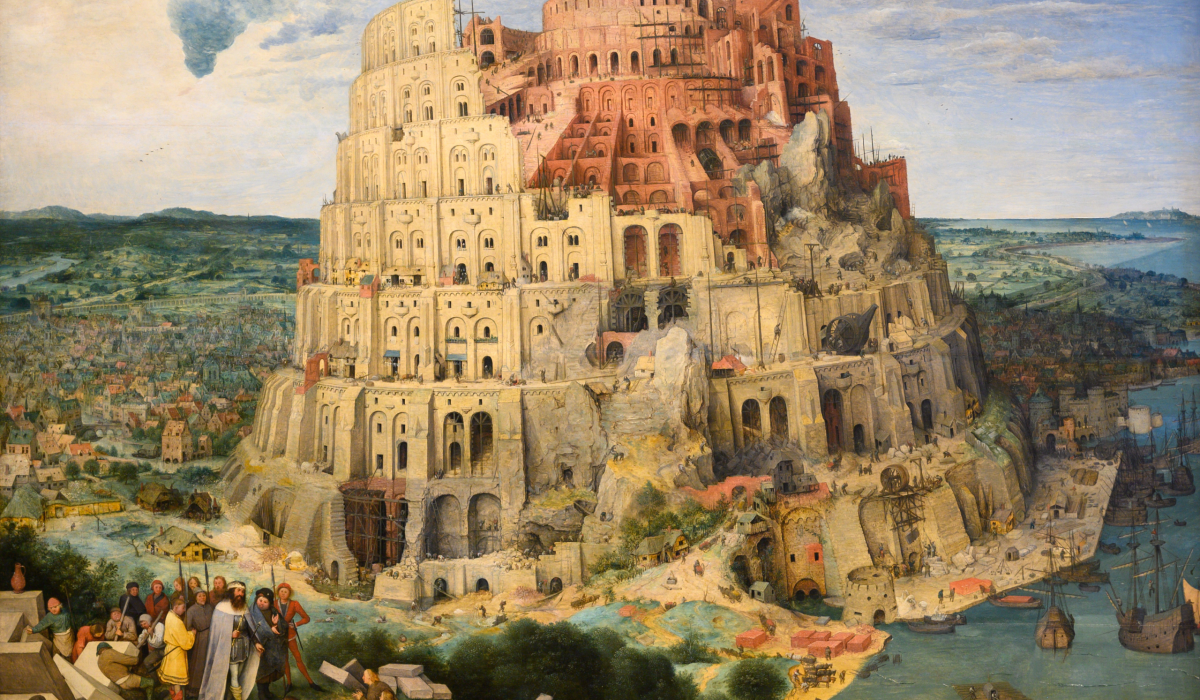
None of that is to say that the Church is naive about technology. In paragraph 9, Pope Leo writes, “Technology has the power to heal, connect, educate and protect our common home; but it can also divide, exclude and generate new forms of injustice. In the abstract, technology in and of itself is not a solution to humanity’s problems, just as it is not inherently evil. In practice, however, technology is never neutral, because it takes on the characteristics of those who devise, finance, regulate and use it. Therefore, the primary choice is not between a ‘yes’ or ‘no’ to technology, but rather between constructing Babel or rebuilding Jerusalem.”
According to Pope Leo, we can choose to use AI in the same way humankind used the bricks and plans for the Tower of Babel—to institute a “culture of power.” Or we can use AI in the way that Nehemiah and the people of Israel proceeded when rebuilding the city of Jerusalem—to raise up a “civilization of love.” One approach is marked by pride, self-interest, and the will to power without reference to God or the dignity of each person. The other places God at its center and proceeds—harnessing technology—with listening, collaboration, and respect for the dignity and initiative of each person and for the common good.
Pope Leo puts forward two spiritualities that he would have us employ as we undertake our own part in the “construction site of our times,” in the push and pull between building either a new Tower of Babel or the New Jerusalem. First, he proposes a Eucharistic spirituality which places God at the center of everything we build. By placing the Eucharistic Jesus at the center of our work, He serves as the “principle of unity and source of new life.”
For Trinity House families, having communion at the center of our construction site—our Trinity House—is already a familiar step. We know that the front door of a Trinity House is keeping the Sabbath holy, receiving our communion from the heart of the Trinity and resting in it, letting the life of God shape and inform the week ahead.
The second spirituality that Pope Leo recommends, in paragraph 236, is that of the “wise architect,” like Nehemiah who led the Israelites in the rebuilding of Jerusalem. Like Nehemiah, Pope Leo calls us each today to “assume an active role, without taking refuge in spiritual sentimentality or retreating into our own little worlds. We must be faithful to the truth, invest in education, cultivate relationships and love justice and peace.”
This spirituality of the wise architect is also familiar to Trinity House families as we continually refer back to our blueprint, the Heaven in Your Home Flowchart, for building an authentic Trinity House. We already know how the Eucharistic Jesus leads us—through his own communion with the Father, in the Holy Spirit—to deepening our relationships, caring for one another, celebrating our communion, and sharing it with others, therefore making our family into an ever more radiant image of God.
As we take our place in the great “construction site of our times,” may we confidently teach our children to move forward with hope, responding to God’s call to build the New Jerusalem among us!

➤ Pope Leo XIV signed Magnifica Humanitas, the first encyclical of his pontificate, on May 15, 2026! Check out the full text here: “Full Text of ‘Magnifica Humanitas’: Read Pope Leo XIV’s First Encyclical” (National Catholic Register)
➤ “13 things to know about Pope Leo’s encyclical on AI” (OSV News)
➤ “Start Here: 15 Quotes From Pope Leo XIV’s First Encyclical Magnifica Humanitas” (National Catholic Register)
➤ “What ‘Magnifica Humanitas’ says, simply explained (with surprises)” (Aleteia)
➤ And for this coming Sunday’s Solemnity of the Most Holy Trinity, check out our “Why Trinity Sunday Should Mean Everything to Your Family” (Aleteia)

➤ Are you a parent interested in building community among families at your parish, starting this September? Discover all the details here, and easily schedule a quick 15-minute discovery call with our team here. Dioceses can benefit from a special offer: three subscriptions for just $999 (or $499/year for your parish). Take the first step toward strengthening community among families at your parish right here!
➤ Want to experience a Heaven in Your Home Gathering? Bring your family to one of these upcoming Trinity House Community Group gatherings:
Basilica of St. Mary in Alexandria, VA (in addition to 5 gatherings, their Religious Education office offers this for parents of children in their sacrament years, schedule here)
St. Rita Catholic School in Alexandria, VA (open to their school community)
St. Philip in Falls Church, VA (English group and Spanish-speaking group here)
St. Theresa in Ashburn, VA (schedule here)
St. John the Apostle in Leesburg, VA (schedule here)
Ss. Philip and James in Baltimore, MD (details here)
St. Louis School in Clarksville, MD (open to their school community)
St. Peter on Capitol Hill, Washington, DC (schedule here)
St. Theresa the Little Flower in Summerville, SC (schedule here)
St. Veronica in Chantilly, VA (schedule here)
Corpus Christi in Phoenix, AZ (schedule here)